

Environment
Can COPS 31 close the gap Between Commitments & People’s Survival

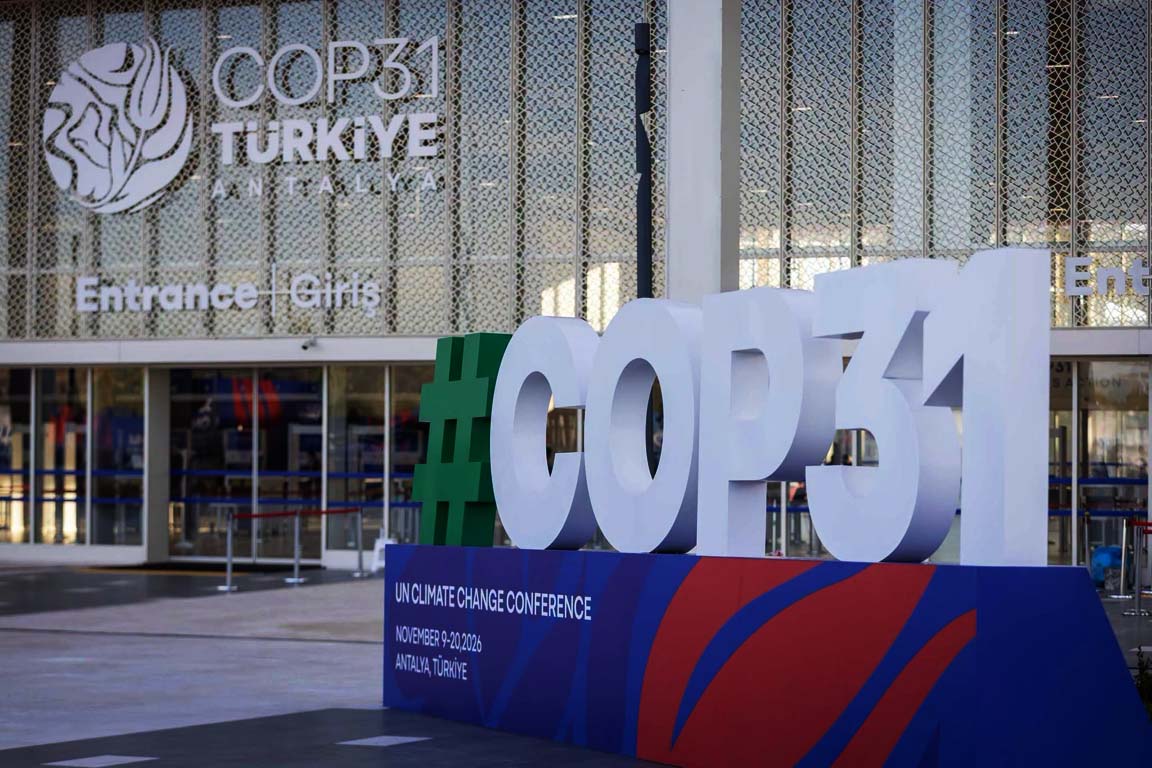
By Lagi Keresoma*
Antalya, Turkiye – 9 November 2026 – The question that needed to be answered at COP31 is whether commitments negotiated by parties to the United Nations Climate Change Convention can improve the lives of people, especially their survival.
At the opening today, COP31, Turkiye’s President, Murat Kurum called on all parties to make COP31 an “Implementation COP”.
The call has indicated the President’s hope for everyone to “focus on closing the gap between commitments made in negotiating rooms and tangible improvements in people’s lives.”
“Türkiye has long served as a bridge and we are ready to take on that responsibility again,” he said.
He gave assurance to “bring countries together across geopolitical and economic divides for this course.
Climate change is a global challenge and Kurum is urging all nations to “turn climate promises into practical action as the world confronts increasingly interconnected climate, economic and geopolitical challenges.”
Can the closure of such a gap be a reality and what can be done to ensure it becomes a reality.

Turkish Minister of Environment and COP31 President Murut Kurum & COP31 President of Negotiations, Chris Bowen, Australia’s Minister of the Environment after the official opening of COP31.
Climate change no longer an isolated issue
When Kurum said that climate change is no longer an isolation issue, he echoed the same belief of Pacific leaders at recent pre-cop summits before travelling to Antalya.
Samoa’s Prime Minister Laaulialemalietoa Leuatea Poalataivao Schmidt during his ministerial speech in Parliament recently also said that “climate change is no longer an isolated matter and that Samoa including parliamentarians need to stand together to support any action taken by the Blue Pacific family.
The negotiation table
Much can be said about negotiation and already the wheel is turning as partners and parties are locked in negotiations which started today with an expected outcome at the end of the two-week conference.
Negotiations can take more than two weeks until parties reach an agreement.
Central to the negotiations are:
- Climate finance & $1.3 trillion roadmap,
- Adaptation & global goal on adaptation,
- Fossil fuel transition & mitigation
- Trade tariffs & border adjustment
- Transition & Article 6
Kurum said he wanted the results of international climate negotiations to become visible in people’s daily lives.

More than 8,000 delegates are participating at the COP31 conference in Antalya, Turkiye this week.
He recalled the climate finance goal agreed in Baku, “of at least $300 billion annually for developing countries by 2035 and the call to scale climate finance from all sources to at least $1.3 trillion annually.”
“Now our promises must be backed by capital, that capital must fund investment and that investment must deliver results,” he said.
The President of Negotiations for COP31 Chris Bowen said that COP31 is an opportunity to show what cooperation can deliver at this crucial time for both our climate and global energy security.
“It will be about unlocking finance and investment, accelerating electrification and boosting action on the ocean, nature’s greatest climate regulator.
He believes that COP31 “must help close the gap between commitment and delivery, and focus on real-world outcomes, investment, infrastructure, jobs, energy security and resilient communities.
“Working together, we can turn climate commitments into stronger, more resilient and prosperous economies. We must turn climate ambition into real-world outcomes,” he said.
Whether the gap can be closed, now falls in the hands of negotiators.
*Lagi Keresoma is Talamua News Editor and is part of the Pacific Media Team covering COPS 31 in Antalya, Turkiye this week.










Feiloaiga a le Afioga ile Palemia ma le Vasega o Tusitala & Au Faasalalau – 2 Aperila

Lavasiga o le Aso: 06 Faamasinoga, HRPP SUPA, Vaalele Fou, Ola Faalagolago – 22 Iuni 2025


