

Regional
16 Vessels of Interest in Major Regional Surveillance Against Illegal Fishing

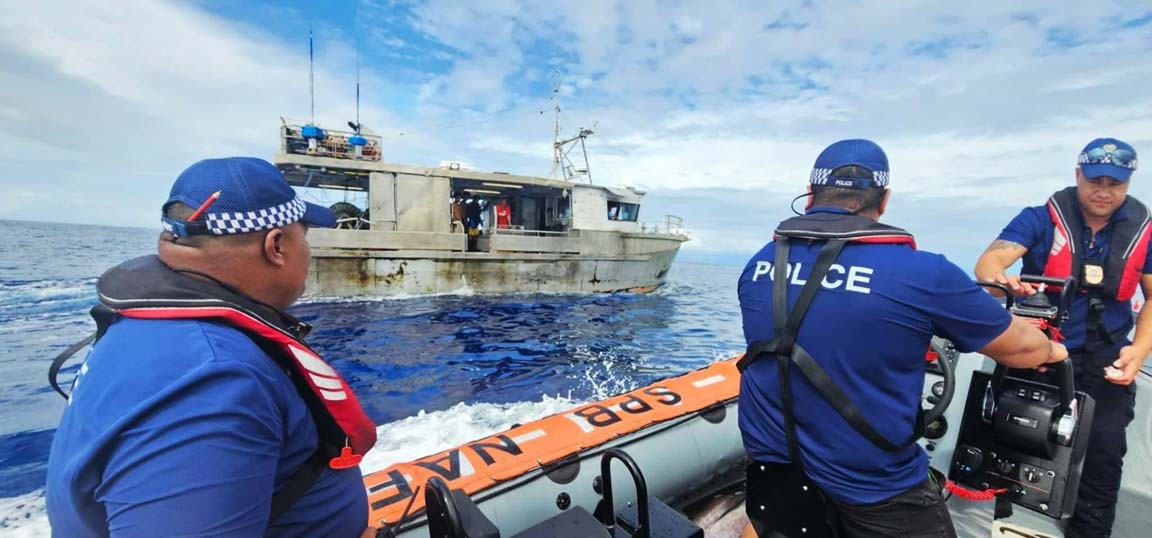
HONIARA, 17 AUG 2026 – Sixteen vessels of interest (VOIs) were identified during Operation Island Chief 2026 (OPIC26), one of the higher numbers recorded in recent FFA coordinated regional surveillance operations, as Members and partners stepped up fisheries monitoring activities across the region.
The two-week long operation, coordinated by the Pacific Islands Forum Fisheries Agency (FFA) from 3 – 14 August, also resulted in four vessels being apprehended.
OPIC26 covered approximately 27.5 million square kilometres of Pacific waters, monitoring the activities of more than 3,000 fishing vessels operating within the Area of Operation.
The operation involved extensive aerial and surface surveillance across the Exclusive Economic Zones (EEZs) of 11 FFA Members and adjacent high seas areas. Participating Members were Australia, Federated States of Micronesia, Fiji, Kiribati, Republic of Marshall Islands, Naoero, New Zealand, Palau, Papua New Guinea, Samoa, Solomon Islands, Tuvalu and Vanuatu.
The operation was supported by members of the Pacific Quadrilateral Defence Coordination Group (Pacific QUADs) and Fisheries Analysts – Australia, France, New Zealand and the United States – through the provision of surveillance assets and other operational support. The Operation was supported by FFA Monitor, Control and Surveillance tools plus additional input from partners; Western Central Pacific Fisheries Commission, Pacific Community (SPC), Joint Analytical Cell, Global Fishing Watch, Hawkeye 360, Starboard and Canadian Dark Vessel Detection.

The outcome reflects the increasingly targeted nature of regional surveillance operations, combining intelligence analysis, satellite and remote-sensing technology, aerial surveillance, surface patrols and vessel inspections to identify activities requiring further investigation by Members.
“Operation Island Chief has again demonstrated the value of our collective efforts to detect and respond to IUU [illegal, unreported and unregulated] fishing, which remains a serious threat to the sustainability of our region’s valuable tuna resources,” FFA Director-General Noan David Pakop acknowledged following the close briefing of OPIC26 at the FFA Headquarters in Honiara this morning.
“The identification of 16 vessels of interest is a significant outcome from this operation and demonstrates the strength of our increasingly targeted approach to regional surveillance. These results reflect the growing capability of our Members, supported by intelligence, technology and strong partnerships, to identify activities of concern and protect our vast ocean areas.”
A key highlight of OPIC26 was the use of Pacific QUAD surface and air capabilities to enable national Shiprider arrangements for the Republic of the Marshall Islands.
National officers from the Marshall Islands embarked aboard United States Coast Guard vessels, allowing them to conduct fisheries patrols and boarding activities under their respective national authorities. This was complimented by Solomon Island officials joining the Royal Australian C-27J Spartan crews for aerial surveillance within the Solomon Islands EEZ.

Operation Island Chief 2026 by the numbers
Operation Island Chief covered approximately 27.5 million square kilometres of Pacific waters monitoring over 3,000 vessels operating the Area of Operation.
During the operation:
- 10,884 satellite detections were analysed
- 92 vessel sightings
- 133 vessels were boarded and inspected
- 45 vessel contacts with high risk IUU assessments
- 16 vessels of interest (VOI) were identified
- 4 vessels were detained or apprehended
Information relating to vessels identified during the operation has been referred to the relevant national authorities for assessment and any follow-up action in accordance with their respective national processes. Vessels of interest identified were associated with IUU fishing and maritime crime.
Operation Island Chief also provided an opportunity to strengthen the skills and operational experience of fisheries and maritime personnel from across FFA Members.
Twenty-five secondees from participating Members were deployed to FFA’s Regional Fisheries Surveillance Centre (RFSC) in Honiara, which served as the main regional coordination centre for the operation.
The secondees included personnel from national fisheries agencies, maritime units, navies and police services, working alongside FFA specialists to monitor the regional surveillance picture, analyse information and support national surveillance activities.
The group brought together experienced surveillance personnel and officers participating in a regional operation for the first time, allowing knowledge and operational experience to be shared between Members.
FFA provides ongoing technical support and capacity development to its Members in monitoring, control and surveillance, alongside the regional systems and coordination arrangements that support collective fisheries surveillance operations.
Operation Island Chief is part of FFA’s programme of regional monitoring, control and surveillance operations, bringing together Members and partners to support compliance with fisheries rules and strengthen the protection of the Pacific region’s fisheries resources.











Feiloaiga a le Afioga ile Palemia ma le Vasega o Tusitala & Au Faasalalau – 2 Aperila

Lavasiga o le Aso: 06 Faamasinoga, HRPP SUPA, Vaalele Fou, Ola Faalagolago – 22 Iuni 2025


