

Education
NUS Ocean Acidification Research Shares Research Findings with Savaia Community

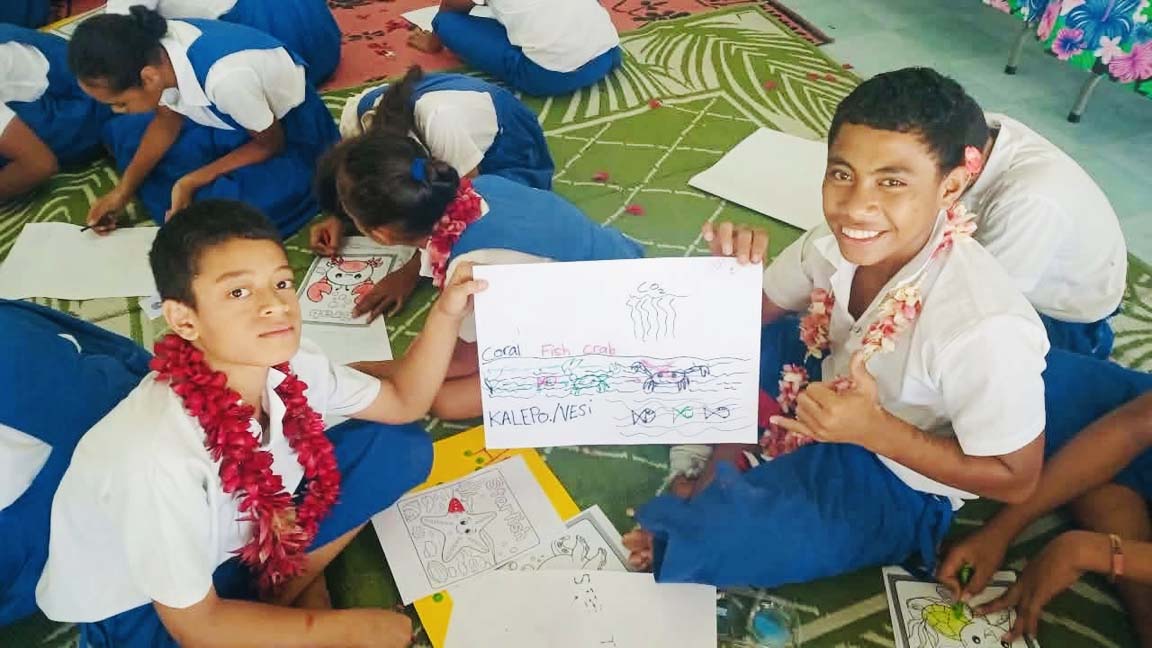
Apia, Samoa – 23 November 2026 – The National University of Samoa Ocean Acidification (OA) Research Team visited Savaia, Lefaga, on Friday, 20 November 2026, to share findings from its recently published research titled “Variability of Carbon Chemistry at the Marine Protected Area of Savaia Village, Upolu Island, Samoa.”
The research was led by NUS Vice Chancellor & President Professor Tuifuisa’a Patila Amosa, with Dr Aleluia Taise-Uili, Asonei Leauga, Varea Vaurasi, Faainuseiamalie Latu, Toetu Leasi, Sekotilani Aloi Gray and Jeffery Leung Wai as co-authors. The project was undertaken under the Faculty of Science, led by Professor Funemalafai Taema Imo-Seuoti.
Led by Dr Aleluia Taise-Uili, the research presentation highlighted key findings on ocean acidification and seawater carbonate chemistry at the Savaia Marine Protected Area.
The engagement also provided an opportunity to acknowledge the invaluable contribution of the Savaia community in supporting coastal monitoring activities and to strengthen the partnership between NUS and the village for future research initiatives.

NUS acidification research with Savaia students
An important feature of the programme was an interactive ocean acidification awareness session led by Tina Taitaifono Mareko, Samau Emere, Varea Dawn Vaurasi, Eleasaro Hugo Leaupepe and final-year Bachelor of Marine Science student Natasha Siutaia.
Students from Savaia Primary School participated in practical educational activities, including egg dissolution experiments using vinegar, red cabbage pH indicator demonstrations and painting. Educational posters were also distributed to community members and students to promote greater awareness and understanding of ocean acidification and its potential impacts on marine ecosystems.
The programme was facilitated by Galumalemana Faainuseiamalie Latu, with the opening prayer delivered by Reverend Keneti Leaupepe.

NUS acidification research with Savaia students
Among those in attendance was former NUS Vice-Chancellor, Asofou Soo, who made a valuable contribution by suggesting “Aati” as a Samoan translation for acidification. This highlighted the importance of communicating scientific knowledge in local languages, ensuring that scientific concepts are accessible and meaningful to
communities.
The community engagement reflects NUS’s commitment to advancing marine science research while strengthening relationships with local communities whose participation and traditional knowledge are essential to understanding and protecting Samoa’s marine environment.NUS sincerely acknowledges the people of Savaia for their continued support and cooperation in facilitating coastal monitoring and research activities. The University looks
forward to strengthening this partnership through continued research, monitoring and community awareness initiatives.








Feiloaiga a le Afioga ile Palemia ma le Vasega o Tusitala & Au Faasalalau – 2 Aperila

Lavasiga o le Aso: 06 Faamasinoga, HRPP SUPA, Vaalele Fou, Ola Faalagolago – 22 Iuni 2025


