

Environment
Samoa and U.S. Launch Tsunami Ready Recognition Program

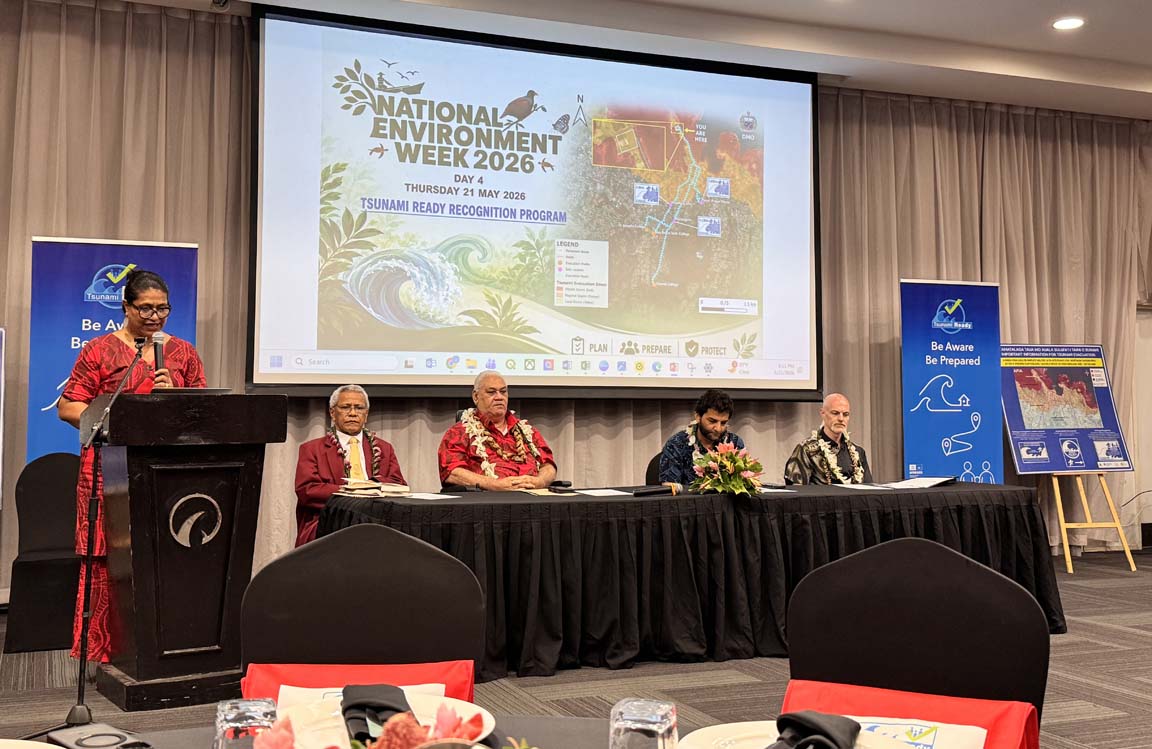
Apia, Samoa – 23 May 2026 – The United States, in partnership with the Government of Samoa officially launched Samoa’s Tsunami Ready Recognition Program (TRRP) during National Environment Week 2026.
The launch highlights the strong partnership between Samoa and the United States in advancing disaster preparedness, early warning systems, and community resilience to help protect lives and strengthen coastal communities.
The program was officially launched by the U.S. Chargé d’Affaires Daniel Tarapacki alongside Hon. Minister Afioga Ale Vena Ale. In attendance were Hon. Prime Minister Laaulialemalietoa Leuatea Polataivao Fosi Schmidt, government officials, community leaders, development partners, and international representatives.
The Tsunami Ready Recognition Program is a community-based initiative that helps coastal communities strengthen tsunami preparedness through evacuation planning, warning systems, public education, drills, signage, and coordinated emergency response planning.
The United States has proudly supported Samoa’s tsunami preparedness efforts through the U.S. National Oceanic and Atmospheric Administration (NOAA), the International Tsunami Information Center (ITIC), and close collaboration with UNESCO-IOC and Samoan government agencies.

U.S. Embassy Chargé d’Affaires Daniel Tarapacki said, “The United States is proud to partner with Samoa in strengthening community preparedness and resilience. Through NOAA, ITIC, UNESCO-IOC, and our shared commitment to disaster risk reduction, we are working together to ensure that communities have the tools, knowledge, and systems they need to respond quickly and save lives. Samoa has shown leadership in the Pacific, and today’s launch builds on that strong foundation.”
The initiative also carries special significance for Samoa as communities continue to honor the memory and lessons of the 2009 tsunami, which claimed 149 lives in Samoa, along with 34 in American Samoa and nine in Tonga.
It devastated coastal communities across the country. That tragedy reinforced the importance of preparedness, early warning systems, community awareness, and strong partnerships.
As Samoa and the United States mark this important milestone, the Tsunami Ready Recognition Program stands as a testament to the power of partnership and the shared commitment to building safer, stronger, and more resilient communities across Samoa and the Pacific.
Background
This partnership has delivered tangible support to Samoa over many years, including:
- Technical assistance for tsunami hazard assessment, preparedness planning, and community risk communication;
- Training for emergency managers, forecasters, and tsunami duty officers;
- Support for tsunami simulation exercises and evacuation drills;
- Development of public awareness and education materials;
- Assistance with community preparedness assessments and recognition under international Tsunami Ready standards;
- Regional exchanges and capacity-building workshops that allow Samoan experts and community representatives to share lessons and learn from best practices across the Pacific.
In 2017, Savaia Lefaga became the first community in the Pacific to receive Tsunami Ready recognition, demonstrating Samoa’s leadership in community-based preparedness and setting an important benchmark for the region.
Through ITIC and UNESCO-IOC, Samoa has also benefited from technical guidance on tsunami evacuation mapping, hazard signage, awareness campaigns, and preparedness standards, helping communities strengthen local systems that can save lives when warnings are issued.
The United States, through NOAA, has further supported tsunami warning capabilities in the Pacific by contributing to improved monitoring systems, enhanced forecasting tools, scientific expertise, and specialized training that strengthen regional warning and response capacity.










Feiloaiga a le Afioga ile Palemia ma le Vasega o Tusitala & Au Faasalalau – 2 Aperila

Lavasiga o le Aso: 06 Faamasinoga, HRPP SUPA, Vaalele Fou, Ola Faalagolago – 22 Iuni 2025


