

2025 General Elections
Samoa’s youth face the ballot with uncertainty

By Dwayne Mahimkar*
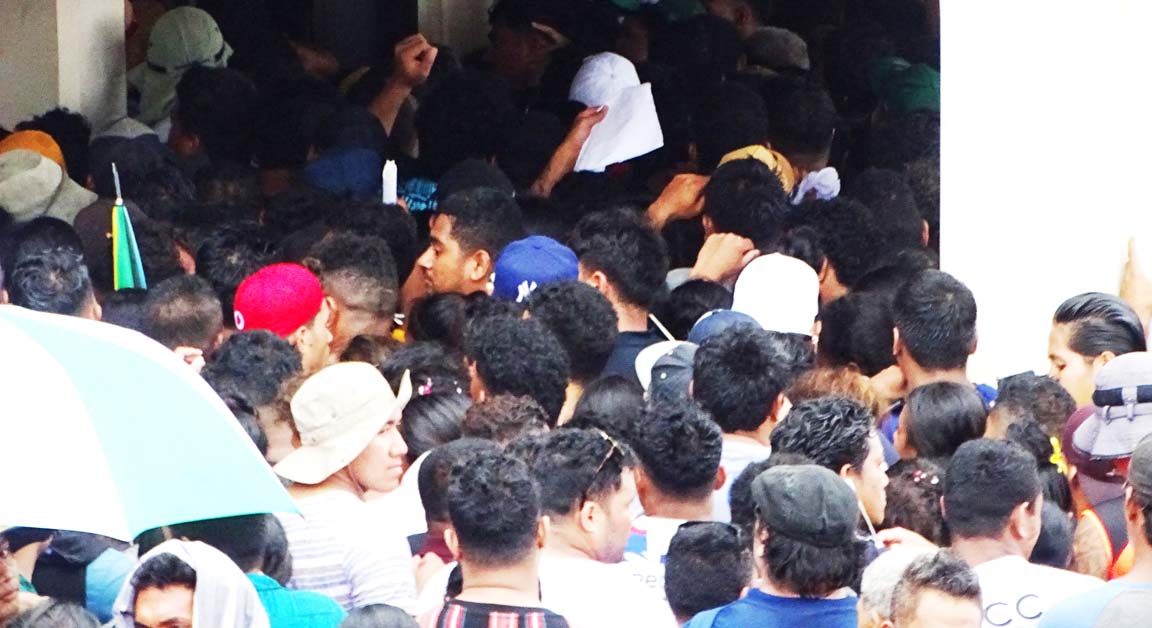
Apia, Samoa – 16 August 2025: As Samoa heads into the general elections, many first-time voters are unengaged, uncertain and uninformed.
“I’m not really interested,” admits 20-year-old Tautinoga, a first-time voter from Upolu. “I don’t think my voice matters.”
This sentiment is echoed by many of Samoa’s youth who find themselves expected to participate in elections that they feel ill-informed about or disconnected from.
While Samoa requires all eligible citizens over the age of 21 to register and vote in the national election, enthusiasm among the younger demographic is waning.
The last general election in 2021 recorded only 758 new voters registered most between the ages of 21 and 30. According to the Office of the Electoral Commission (OEC), only a small portion of those turned up on polling day.
“The youth always have the lowest turnout,” says Assistant Electoral Commissioner Fetogi Vaai. “That’s why we started focusing on youth engagement especially through programmes like National Voters Day on 1st March every year.”
These programmes aim to raise awareness about the importance of voting and encourage informed decision-making among young voters. Still, the challenge persists.
Traditionally, Samoan voters have followed family or village preferences when casting their ballots. For some young people, this cultural expectation adds to their uncertainty.
“People usually vote for who their family supports,” says 21 year old Dalton. “But for me, it depends where I end up voting. My mom wants me to vote in Savai’i but I think I’ll vote in Vaivase where I live.”
Others, like Feagaimaleata want to vote based on merit but lack the tools to do so confidently.
“With law alone, it exposes me to politics but only on limited grounds,” she explains. “I’d like to know who I’m voting for and how capable they are.”
Leki, another first-time voter highlights a language barrier as a key issue in accessing political information.
“I’m not fluent in Samoan,” he says. “If there was more information in English I’d probably pay more attention.”
Though their interest in politics varies, one thing most youth voters agree on is the need for better outreach, transparency and education from political leaders.
“It comes down to how they [candidates] utilise the power given to them,” says Feagaimaleata. “They should serve the people, not just hold the title.”
The OEC agrees. Their ongoing efforts aim to reframe the way young voters view elections not as obligations but opportunities to shape their future.
“Your vote should focus on a person that will develop your constituency,” Vaai says. “Not just someone you know personally.”
As Samoa prepares for the snap election, the nation’s youth find themselves caught between tradition and transformation. They may not yet feel ready to choose but the ballot box awaits.
*Dwayne Mahimkar is a USP Second year BA Communications and Media student.










Feiloaiga a le Afioga ile Palemia ma le Vasega o Tusitala & Au Faasalalau – 2 Aperila

Lavasiga o le Aso: 06 Faamasinoga, HRPP SUPA, Vaalele Fou, Ola Faalagolago – 22 Iuni 2025


