

Culture
Faletele project construction under International Heritage Initiative

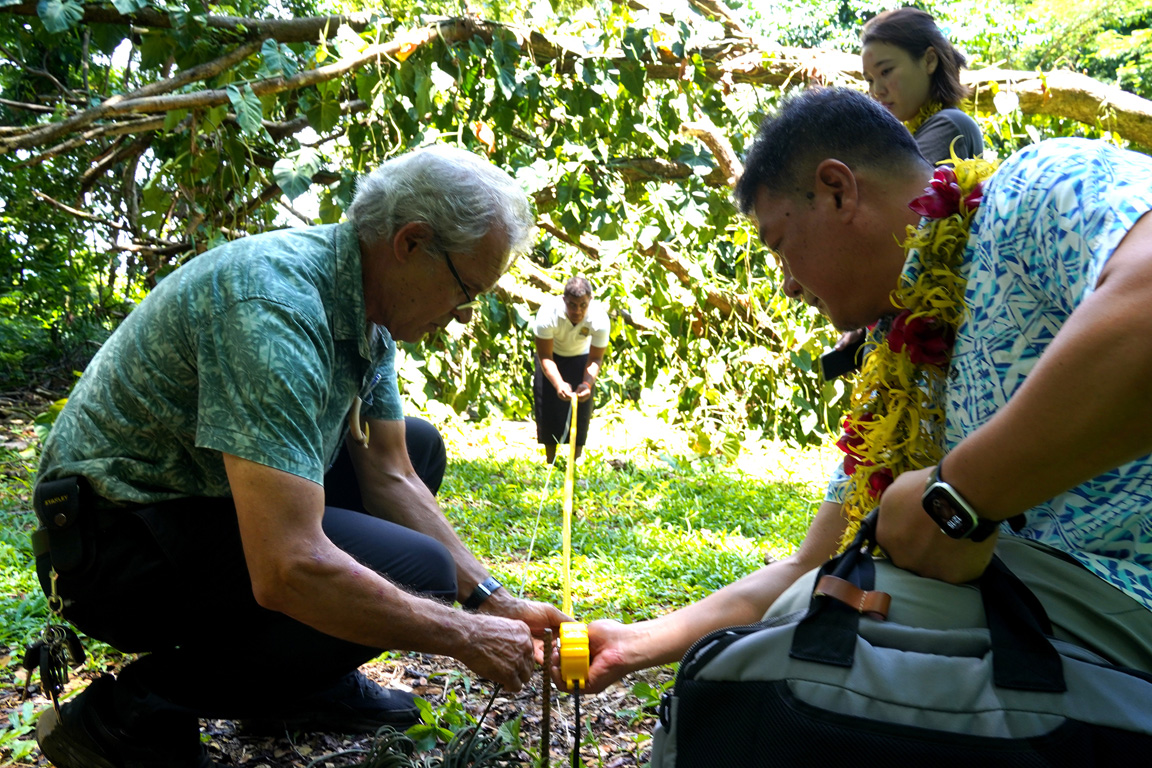
Apia, SAMOA – 30 March 2026 — A major cultural heritage project supported by the Endangered Material Knowledge Programme (EMKP), funded by Arcadia and administered through the British Museum, is set to begin construction of a traditional Samoan faletele at Le Amosā o Savavau School, marking an important milestone in the documentation and revitalisation of indigenous architectural knowledge.
British High Commissioner His Excellency Mr Gareth Hoar recently visited the site where the climate-resilient meeting house will be built. The project forms part of the EMKP-funded initiative “Documenting Traditional Architecture of Samoa,” led by Principal Applicant Galumalemana Steven Percival in partnership with the University of St Andrews and the British Museum.

Leota Donna Ioane and His Excellency Mr. Gareth Hoar, British High Commissioner.
The faletele will be constructed by a traditional house-building guild from the village of Sa’anapu, Moe ma le Āiga Sā le Malama, under the leadership of Matua o Faiva (Master Builder), Lesā Laufale Fa‘anū. The team includes heritage artists from the Tiapapata Art Centre. In keeping with EMKP’s mission, the construction process—including rituals, techniques, and embodied knowledge—will be carefully documented through video, audio, photography, and written records for long-term preservation and open-access research.
“This project is significant because it showcases endangered material knowledge in a living context,” said Mr Hoar. “Students will not only observe but, where appropriate, gain limited hands-on experience at different stages of construction—ensuring that this knowledge continues to be transmitted to future generations.”
Principal Leota Fitimaula Donna Ioane emphasised the project’s alignment with the school’s founding vision. Established over twenty years ago by the late Aiono Dr Fanaafi Le Tagaloa and Le Tagaloa Pita, the school is widely recognised for its strong emphasis on Samoan language and culture. “This is exactly the kind of experiential learning our founders envisioned,” she said. “The faletele will become a living classroom and a focal point for cultural practice.”
The school currently has a roll fluctuating between 90 and 100 students, all of whom stand to benefit from observing the construction process and engaging with elements of traditional practice. Construction is expected to begin later this year.

His Excellency Mr. Gareth Hoar wearing a traditional fragrant necklace (laumaile) stands with Principal Leota Donna Ioane, surrounded by students of Le Amosā o Sāvavau. Photo: supplied.
The visit was marked by a ceremonial moment as Project Manager Galumalemana Steven Percival, accompanied by a student, performed a fagufagu, the Samoan nose flute, acknowledging both the significance of the site and the upcoming start of the project. Nearby archaeological features, including a foaga (adze-sharpening stone), further highlight the historical importance of the location.
The project has attracted international interest. In an earlier visit, Counsellor Kanata Tomohiro, Deputy Head of Mission at the Embassy of Japan, and Second Secretary Ms. Sumiko Nakashima met with Galumalemana and school representatives. Principal Leota noted the importance of the visit, describing it as the school’s first engagement with Japanese officials. She also highlighted existing cultural connections through the teaching of Japanese culture at the school.

Ms. Sumiko Nakashima and Mr. Kanata Tomohiro at the faletele site with students. Photo: supplied.
Students played an active role during the visit, symbolically representing the 32 perimeter posts of the future faletele under guidance from the project team—an illustration of the project’s educational and participatory approach.
This initiative builds on earlier collaborations between Galumalemana and the Sa’anapu builders, including the construction of a faletele at Tiapapata Art Centre in 2013 and an international project in Japan in 2019 at the Little World Museum of Man.
Supported by the Endangered Material Knowledge Programme (EMKP), funded by Arcadia—a charitable foundation that supports the preservation of cultural heritage and the natural environment—and administered through the British Museum, the project will produce a comprehensive digital archive of Samoan architectural practices.










Feiloaiga a le Afioga ile Palemia ma le Vasega o Tusitala & Au Faasalalau – 2 Aperila

Lavasiga o le Aso: 06 Faamasinoga, HRPP SUPA, Vaalele Fou, Ola Faalagolago – 22 Iuni 2025


