

Law & Order
VIEWPOINT: Politicians, the Media and Responsibility

Apia, Samoa – 22 September 2025 – In recent days, a statement reported in the Samoa Observer newspaper has drawn public attention. The headline, “Lealailepule says government could be overthrown sooner,” carried with it a word that cannot be overlooked: “overthrow.”
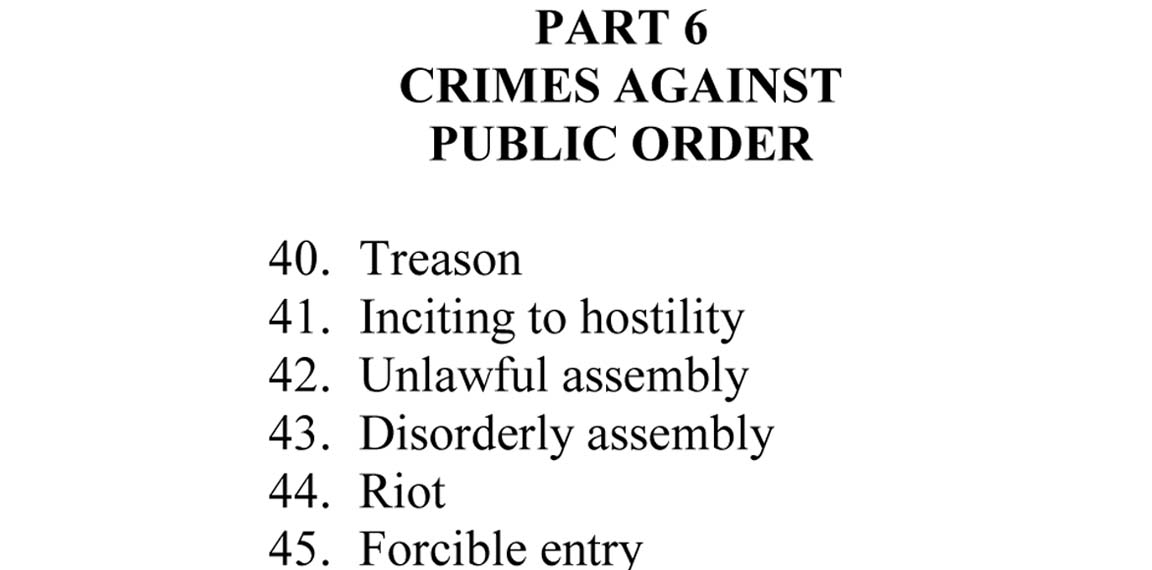
The word itself carries significant legal and constitutional weight. Under Samoa’s Crimes Act 2013, section 40, the act of overthrowing a government by force is classified as “treason”, with a penalty of life imprisonment.
By law, treason involves the attempt to remove a government through violence or force.
This raises important questions.
Was Lealailepule speaking figuratively about political change through parliamentary processes, or was the word “overthrow” intended in its literal sense?
Was he speaking as an individual, or as a representative voice of the HRPP? The distinction matters, because careless use of such language can create uncertainty, fear, or misunderstanding in the public mind.
The role of the media must also be considered. 
The newspaper’s choice of headline, highlighting the term “overthrow” has the effect of amplifying a word that is charged both politically and legally.
It is worth asking whether this kind of presentation by the newspaper risks inflaming tensions or being misinterpreted by readers.
Was he reported accurately or was he quoted out of context?
The Crimes Act also recognises another offence: “inciting hostility against the Government of Samoa” in circumstances where there is a risk of disorder.
This underlines how serious the law regards both the making and the publishing of statements that may undermine national stability.
Samoa is a democracy, and with that comes the right to vigorous debate, criticism, and opposition. These freedoms are essential to good governance.
At the same time, democracy requires responsibility—from politicians, who must weigh their words carefully, and from the media, which must report with balance and context.
In the end, the health of Samoa’s democracy rests not only on strong laws and institutions, but also on the wisdom and restraint of those who lead and those who inform the public.
Words are powerful, and in times of political tension, they must be chosen and presented with care.









Feiloaiga a le Afioga ile Palemia ma le Vasega o Tusitala & Au Faasalalau – 2 Aperila

Lavasiga o le Aso: 06 Faamasinoga, HRPP SUPA, Vaalele Fou, Ola Faalagolago – 22 Iuni 2025


