

Law & Order
Joint Training Strengthens Samoa’s Use of Proceeds of Crime Laws

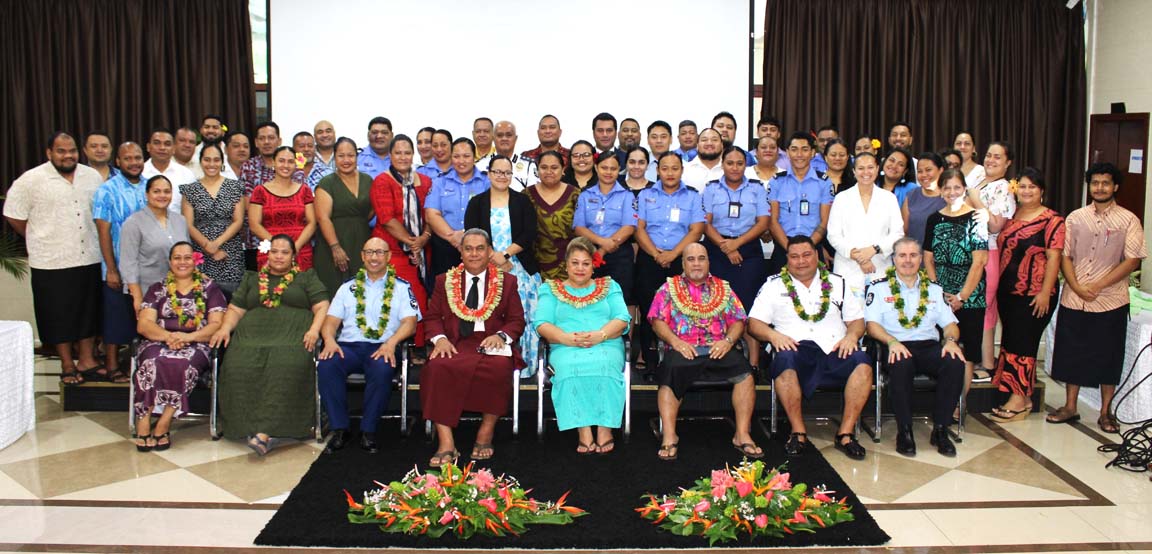
Apia, Samoa – 02 April 2026 – In a joint effort between the Ministry of Police, Prisons and Corrections and the Office of the Attorney General, a two-day national training programme on Proceeds of Crime commenced on 30 and 31 March 2026.
The training bringing together officers from the Samoa Police, Customs, the Financial Intelligence Unit, and lawyers of the Office of the Attorney General and focused on strengthening the practical application of the Proceeds of Crime Act 2007 in identifying, restraining and forfeiting property connected to criminal offending.
The programme was officially opened by the Deputy Prime Minister, Afioga Mulipola Anarosa Ale-Molioo, who emphasised the importance of strong collaboration among enforcement agencies in addressing serious crime and safeguarding the interests of Samoa.
This initiative reflects the shared commitment of the Ministry of Police, Prisons and Corrections and the Office of the Attorney General to enhance inter-agency coordination and ensure that Samoa’s law enforcement and legal institutions are equipped to effectively utilise proceeds of crime legislation as a key tool in combating criminal activity.
The training covered the key areas including:
- Identification of tainted property under the law;
- Understanding the onus and standard of proof in forfeiture proceedings;
- Lawful search and seizure procedures;
- The process for obtaining restraining orders within statutory timeframes; and
- Preparation of forfeiture applications following conviction.

Participants were actively engaged in discussions of leading Samoan case law, including:
- Attorney General v Filipaina [2012] WSCA
- Attorney General v Taatiti [2014] WSSC 185;
- Attorney General v Fiti & Others [2014] WSSC 63 and
- Attorney General v Steven Tuamoheloa [2025]
The Office notes that the former Chief Justice of Samoa, who has contributed significantly to the development of Samoa’s jurisprudence, helpfully summarized the law in these cases.
These authorities will therefore form a central part of the training, enabling participants to understand the practical application of Proceeds of Crime Law in Samoa, particularly in relation to the definition of “tainted property,” the use of property as an instrument of offending, and the treatment of third-party interests.
The Ministry of Police, Prisons and Corrections also emphasised the importance of strengthening investigative practices to ensure that matters brought before the courts are supported by clear, complete and reliable evidence.
This joint initiative underscores a determination by Government agencies to work together.











Feiloaiga a le Afioga ile Palemia ma le Vasega o Tusitala & Au Faasalalau – 2 Aperila

Lavasiga o le Aso: 06 Faamasinoga, HRPP SUPA, Vaalele Fou, Ola Faalagolago – 22 Iuni 2025


